I Ran 2 Sales a Year and Still Sold Out—Here’s the Discount Strategy That Actually Worked
Most retail owners think discounts are a sales lever.
They’re not.
They’re a positioning lever.
Used well, discounts increase conversions without killing your margins or training customers to wait you out. Used poorly, they turn your brand into a clearance rack with an Instagram account.
I know because I ran two brick-and-mortar stores, sold online, did pop-ups year-round—and still only ran four sales a year.
And we sold out.
This article will show you exactly how to discount with intention, not desperation—so you protect profit, build loyalty, and stay in control of your business.
SECTION 1: The Problem Most Retail Owners Ignore (and the Math That Exposes It)
Let’s get uncomfortable for a moment.
Most discount strategies fail because owners never do the math.
Here’s a simple example using a candle business.
- $30 candle
- $6 cost to make
- $24 gross profit
Now let’s apply discounts.
- 10% off ($3) → $21.60 profit
- 15% off ($4.50) → $20.40 profit
That money doesn’t disappear quietly. It comes directly out of your labor, your time, and your future ability to hire help.
Before you discount anything, you must know:
- Your cost per product
- Your real profit margin
- Your minimum viable discount
Running discounts without knowing your margins is like driving with your eyes closed because you’ve been on the road before.
Discounting without math isn’t generosity. It’s erosion.
SECTION 2: Coupon Marketing Isn’t the Problem—Desperation Is
A coupon is simple: an incentive to encourage action.
Marketing is something deeper.
As Seth Godin puts it:
Marketing is “a generous act of helping others become who they seek to become.”
That means your discounts should:
- Reduce risk for the customer
- Reward loyalty
- Create momentum
- Signal intention
They should never signal panic.
When your copy sounds rushed, apologetic, or chaotic, customers feel it. When your offer is thoughtful, timed, and clear, customers trust it.
Your discount is not just a price change.
It’s a message about your brand.
SECTION 3: Proof This Works (Without Constant Sales)
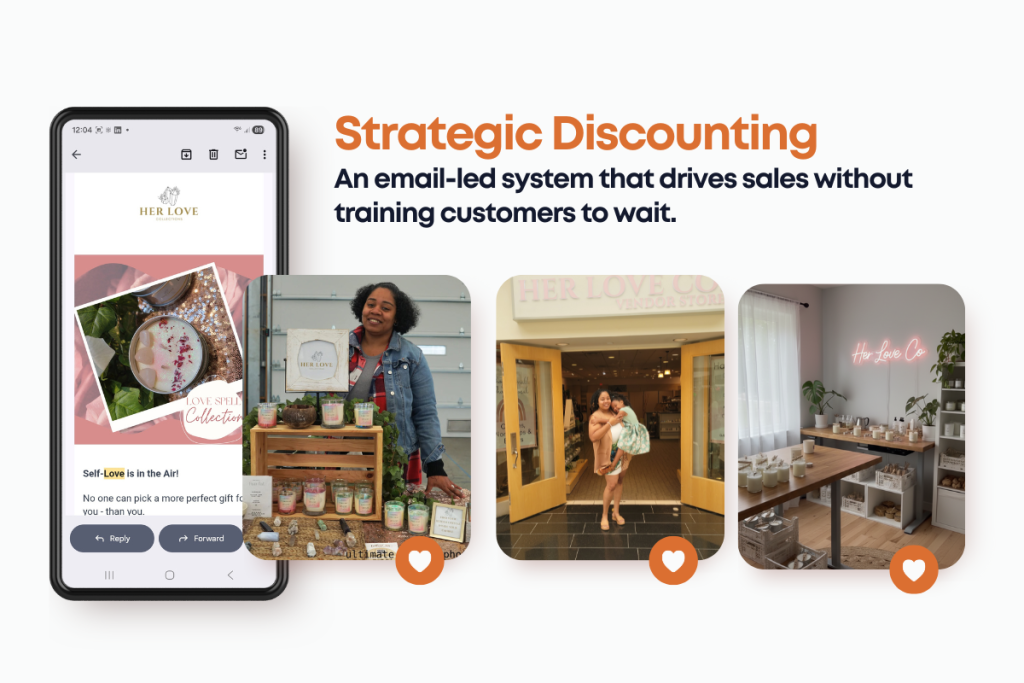
In my business, discounts made up about 30% of sales.
The other 70% were full-price purchases.
That wasn’t luck. That was strategy.
What I did:
- Two online sales per year (holidays)
- Occasional in-person incentives at pop-ups
- 10% off for new customers
- Strategic bundles like Buy 1 Get 1 50% Off or Buy 2 Get 1 Free
What I did not do:
- Weekly promo codes
- Monthly “flash sales”
- Discounting because traffic was slow
The result?
Customers who discovered us at a discount had no problem paying full price later—because the brand wasn’t trained to be cheap.
We treated discounts like holidays—special, planned, and worth waiting for—not background noise.
SECTION 4: The Trap—Why Constant Discounting Always Backfires
Discount addiction is real.
Here’s the simplest way to understand it.
If you give a child chocolate before dinner three nights in a row, they expect it on the fourth night.
Customers work the same way.
When you discount constantly:
- Full-price sales dry up
- Customers wait instead of buying
- Your margins shrink
- Your stress increases
Run a 25% off sale every month and watch your audience learn to stall.
The worst part?
Most store owners don’t notice until cash flow is already tight.
SECTION 5: The System—How to Decide If You Should Discount
A discount without a goal is like turning the key in a car without knowing where you’re going—you’re moving, but you’re not progressing.
Before you create a single promo code, answer these three questions.
1. How much can I discount this product?
I never went above 20%.
Anything more didn’t make sense for my margins.
2. Why am I running this discount?
Every goal requires a different strategy:
- New customers → risk reduction
- Clearance → inventory recovery
- Upsells → AOV growth
If you can’t name the goal, don’t run the discount.
3. How long will this run?
Scarcity only works when it’s real.
Clear start. Clear end. No extensions.
Your customers don’t need pressure.
They need clarity.
SECTION 6: Brand Copy Is What Protects Your Value
Bad copy can cheapen the brand.
Your brand voice is the personality your customer experiences every time you speak.
Your brand positioning answers:
- Who you are
- Who you serve
- Why you’re worth paying attention to
Look at Sephora.
They discount without begging.
They sell without apologizing.
They educate while inviting people in.
When they run a sale, it sounds like a gift—not a clearance cry for help.
Your goal is the same.
When you announce a discount, your language should feel intentional, confident, and aligned with your values.
SECTION 7: The 4 Strategic Moments When Discounting Actually Makes Sense
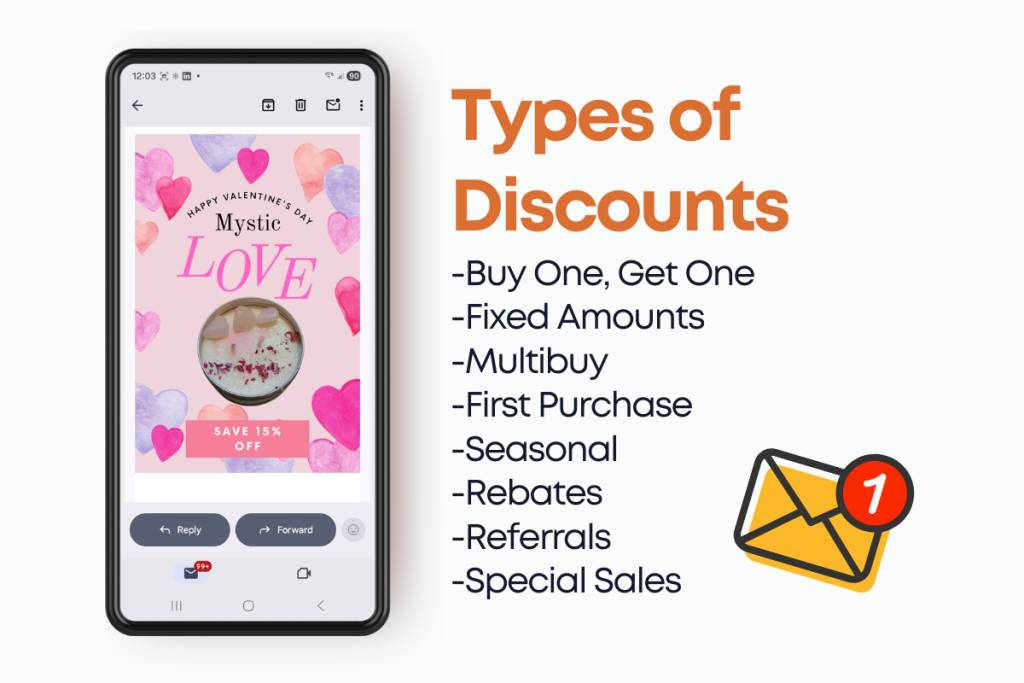
1. New Subscribers
A first-purchase discount lowers risk.
10% off works well because it feels meaningful without hurting margins.
Position it as:
- “Your insider welcome”
- “A thank-you for joining”
Not “PLEASE BUY SOMETHING.”
2. Local Pop-Up Events
Pop-ups do what social media never will: real feedback.
Buy 1 Get 1 50% Off or Buy 2 Get 1 Free works well here because:
- It increases unit sales
- It rewards commitment
- It feels experiential
If I did 20 events in a year, I discounted at about 5—usually seasonal or special events.
3. Upsells That Increase AOV
Discounting the second item protects your margins.
Example:
- Buy a $30 candle
- Get a wax melt for $5 off
This increases average order value without discounting your hero product.
4. Birthday Rewards
This is about relationship, not revenue.
A small birthday incentive reinforces loyalty and keeps your brand top of mind—without training customers to wait for sales.
SECTION 8: Quality Is the Real Reason Discounts Worked
People didn’t pay $30 because of discounts.
They paid because the product delivered:
- Strong scent throw
- Thoughtful design
- A hidden crystal that made the candle feel personal
The crystal wasn’t a gimmick.
It was the reason customers chose us over a $15 candle elsewhere.
Quality justified the price.
Discounts simply removed hesitation.
People don’t mind paying more when they can feel the difference. Your pricing teaches customers how to treat your brand.
SECTION 9: The Stakes (Read This Twice)
You are not a discount store.
You are a business with intention, value, and impact.
When you discount out of fear, customers feel it.
When you discount with strategy, customers trust you.
Choose your discount strategy before your margins choose it for you.
What to Track (So You’re Not Guessing)
You don’t need perfect data—just honest data.
Track:
- Cost vs. price per product
- Full-price vs discounted sales
- Repeat customer behavior
- Average order value with upsells
- Email pop-up conversion rates
Data doesn’t judge.
It guides.
Final Thought
You don’t need more sales.
You need fewer, better ones—designed on purpose.
And you don’t need another course to do that.
You need systems.
Leave a Reply